Water play, shade trees and grassed mounds soften the plaza in the shadow of the MCG.
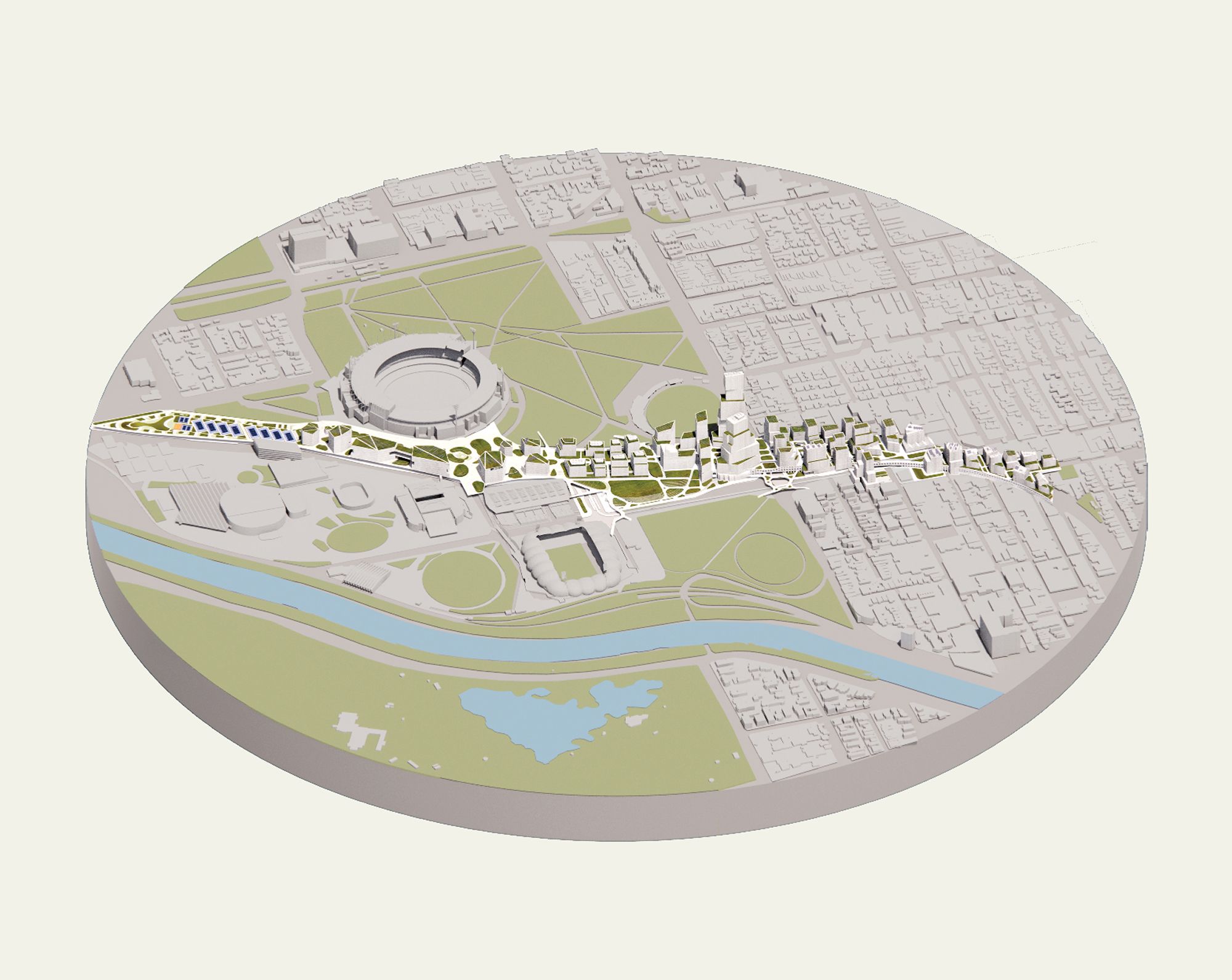
G Line will be a benchmark for Australian development — showcasing what zero-carbon construction and zero-waste operations can look like at city scale.
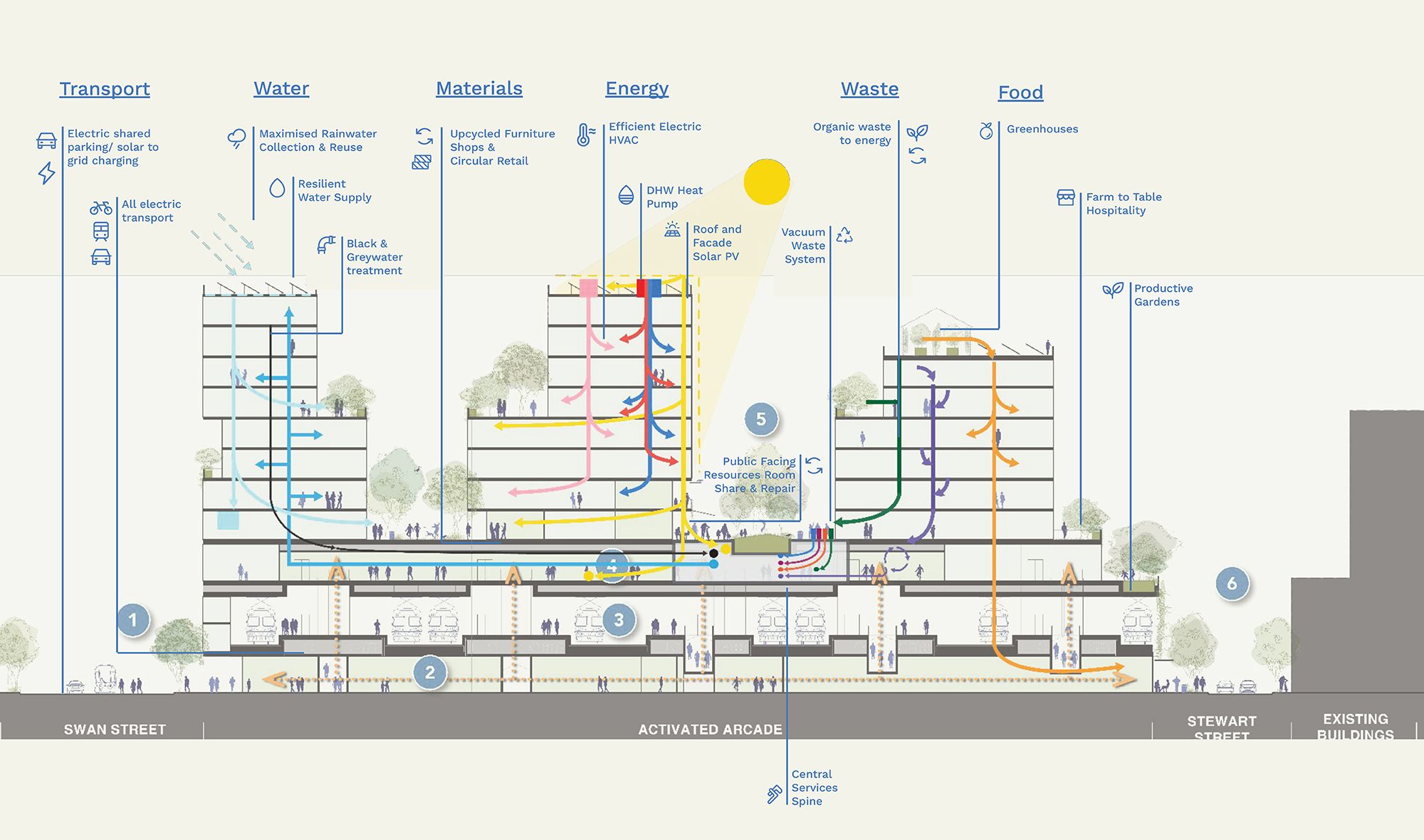
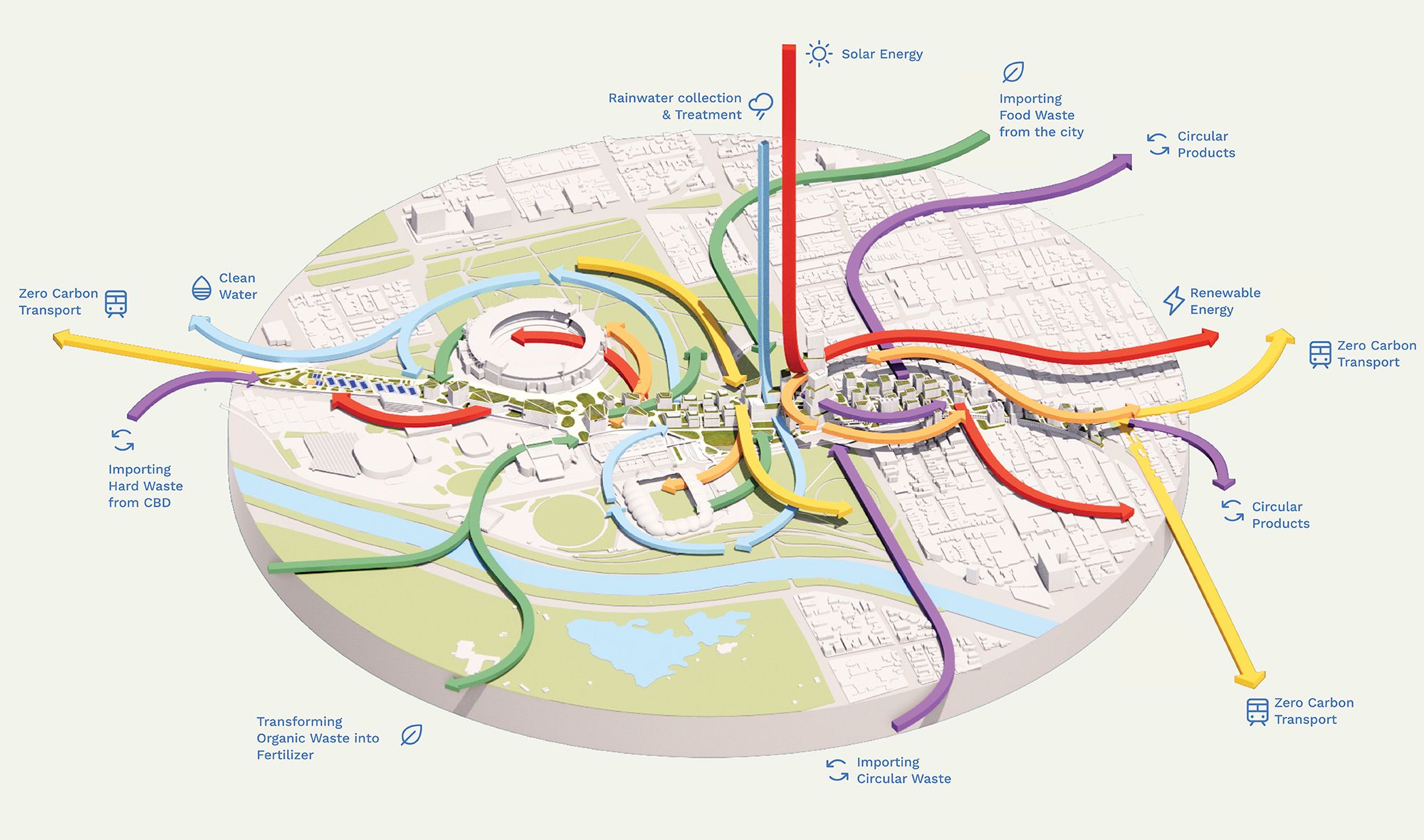
Environmental strategies run through every part of the development. They include retaining, storing and reusing water; transforming food and green waste into valuable resources; reusing materials so nothing goes to waste; expanding green space and tree coverage; and zero-carbon transport that supports an active, liveable community.
Environmental and Innovation Targets
Produces more energy than it consumes through on-site renewables.
Water is retained, stored and reused across the city.
Food and green waste are processed and support the city’s energy and soil systems.
Existing materials are recovered, sorted and re-entered into the supply chain.
100% Electric Transport and streets that are easy and safe to walk and cycle.
The city grows a portion of what it eats through productive landscapes.
Planting with species that lower air temperatures and support urban ecosystems.
All new buildings are zero emissions and high performance buildings.
9000
0
94%
80%
30%
5years
Insulation, glazing and airtightness engineered to reduce energy demand before any technology is added.
Every building runs entirely on electricity, with no reliance on gas.
High-efficiency heating, cooling and ventilation systems that recover and reuse energy rather than waste it.
Every available roof and facade surface is considered for solar generation, turning the precinct into a source of energy, not just a consumer of it.
Water-efficient fittings throughout, paired with rainwater capture and reuse to reduce demand on the mains supply.
Landscape and building design work together to support local ecology and strengthen green connections across the precinct.
Construction materials selected for low embodied carbon and designed to be recovered and reused at the end of their life.