
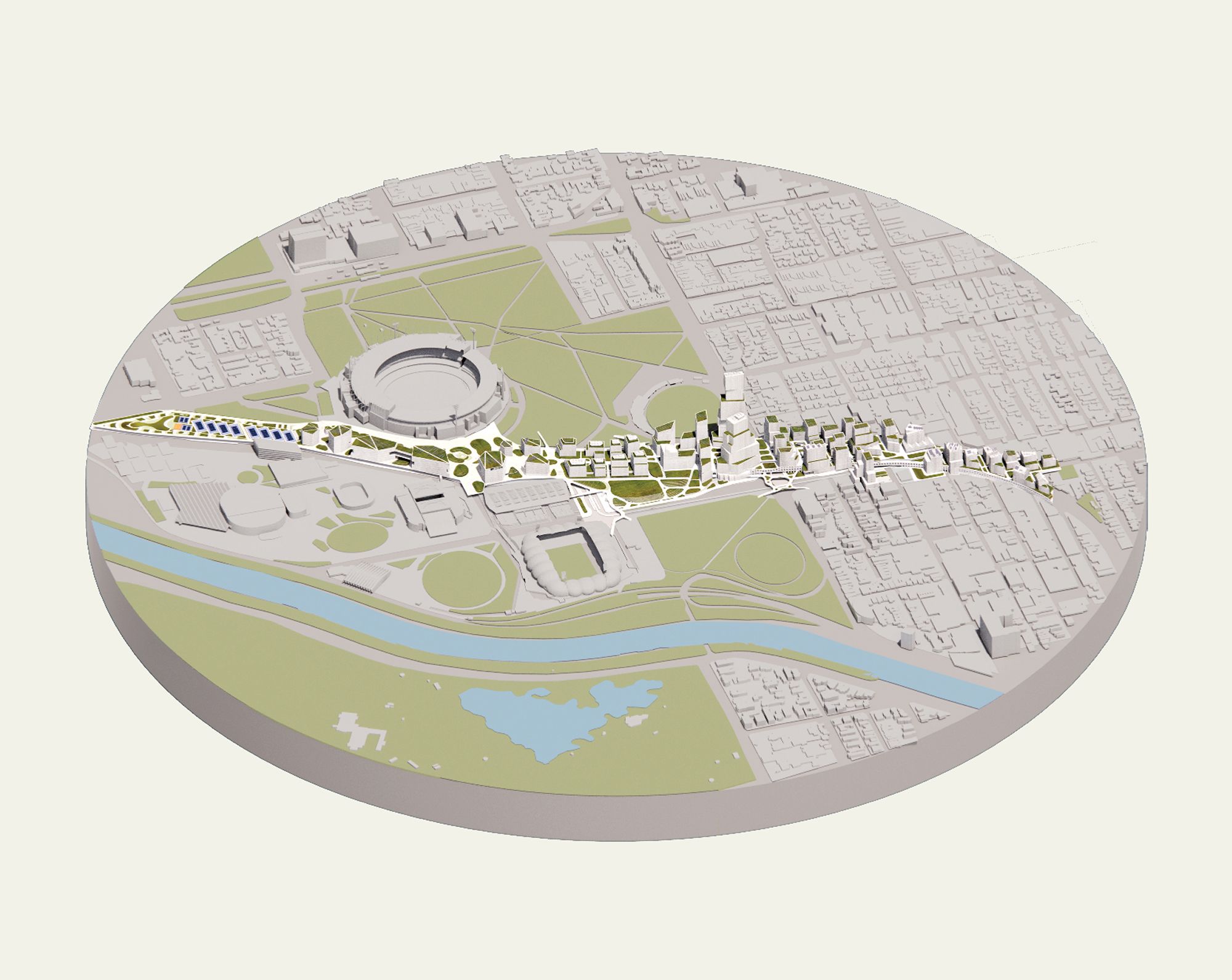
G Line will reinforce Melbourne’s position as the world’s sporting capital.
G Line gives Melbourne’s sporting precinct a world-class arrival and supporting infrastructure its venues deserve.
It separates competing movements, improves access and creates the capacity to host overlapping major events more effectively. Importantly, it extends the event experience beyond the venue itself, supporting hospitality, entertainment and fan activation before and after events while reinforcing Melbourne’s position as the world’s sporting capital.

Sport and culture, every day of the week
This precinct already holds some of the country’s biggest shared moments. What it lacks is a life between them.
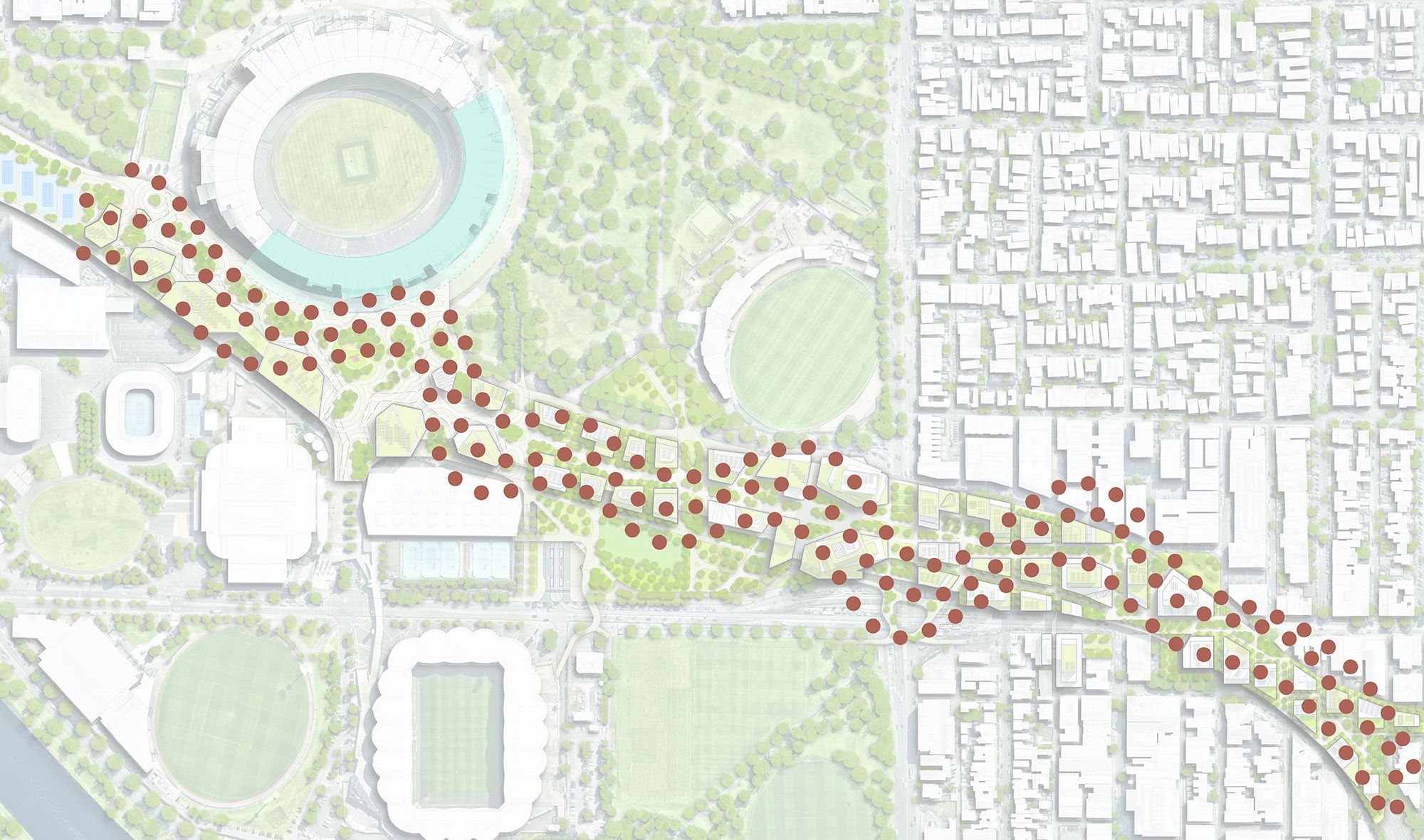
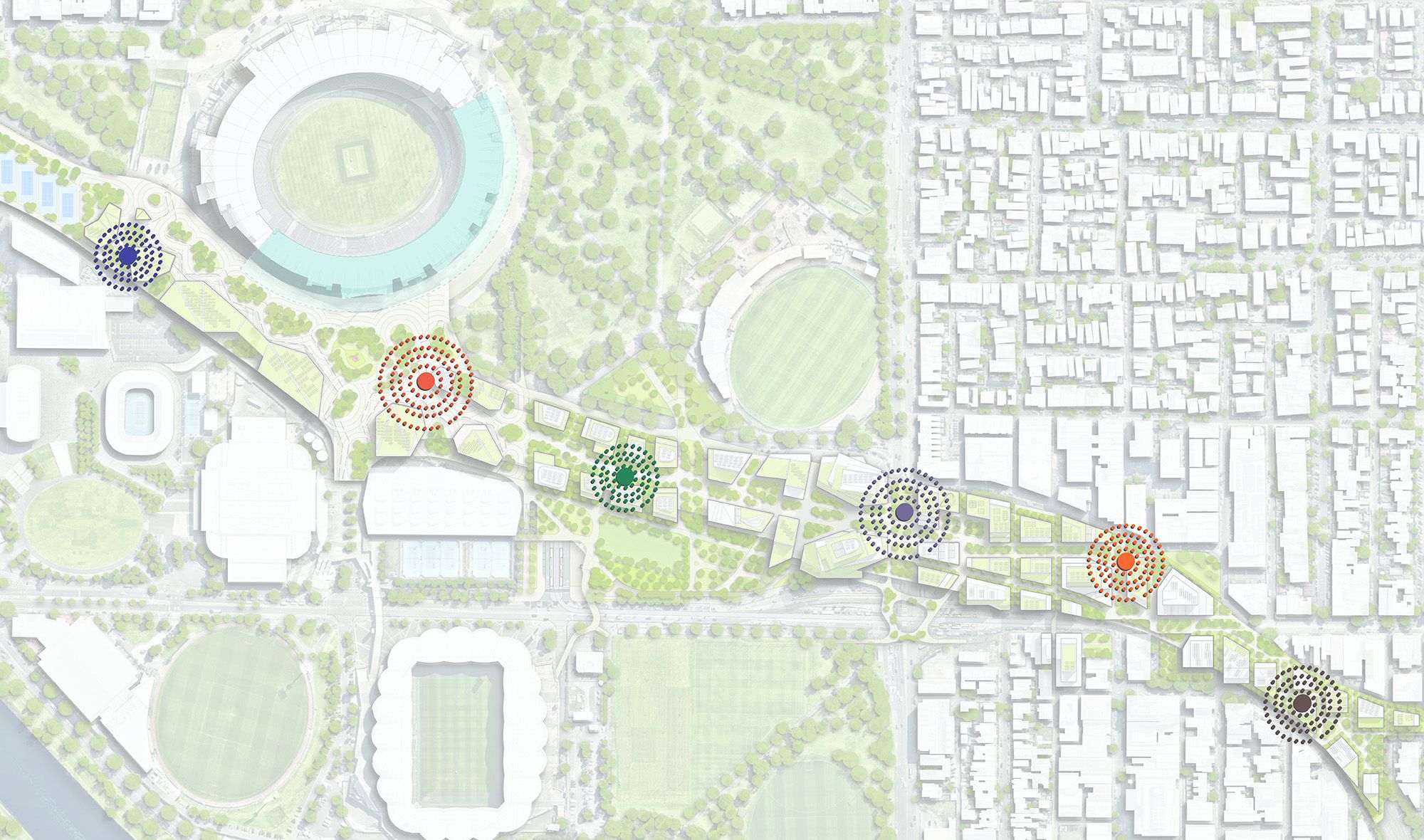
G Line spreads sport and culture along its full length, so neither depends on the event calendar. Community sport and recreation sit alongside the major venues, and people who come to play are as much a part of the precinct as those who come to watch.
Culture is built into each neighbourhood. The site’s sporting and rail history is told through the public realm, together with the living presence of Country, developed in partnership with the Wurundjeri Woi-wurrung Traditional Owners. Art and performance give the spaces between the venues a character of their own.


1/6
Wider, shaded concourses and allowance for future expansion give the major venues space they currently lack. Purpose-built support buildings free up valuable space inside the venues themselves.
Separate arrival routes, purpose-built support buildings, clearly defined zones, and a shared concourse connecting them, are designed to let major events run side by side.
Richmond Station is rebuilt for nine-carriage trains, with a dedicated events platform to clear crowds. A relocated tram stop puts AAMI Park 100 metres away. New walking and cycling links spread crowds across every edge of the precinct, before and after the game.
Plazas and event spaces hold pre-game activation and post-match dining, and a hotel overlooking the MCG lets visitors stay through a major event. People have a reason to arrive early and stay on.
Bronze statues, a sports museum and daily heritage tours share the precinct’s sporting history every day of the year.
Sports administration, club headquarters and a media hub move into purpose-built facilities. A connected internal network lets staff move between venues quickly.
Sports medicine and sports science are based within the precinct, with public recovery facilities such as heated pools and hydrotherapy proposed alongside.
Eight tennis courts at Jolimont Fields for community and Tennis Australia use, with shelters, bandstands and public BBQs. During the Australian Open, they become event space. New youth activation spaces are also planned.
The Front Lawn at Jolimont Fields is an activated community oval with a pavilion, open to local competitions and large events like the Melbourne Marathon.
Running and cycling clubs use the precinct as a meeting point, with bike links to the Main Yarra Trail and Capital City Trail. Boot camps and fitness sessions run on the open lawns.
1/2
Stories of Country are woven throughout G Line, developed in partnership with the Wurundjeri Woi-wurrung Traditional Owners. Language and places to pause and learn are built into how people move through the precinct.
The precinct already hosts stadium-scale concerts alongside its sporting calendar. New event space gives these shows room to spill out before and after, and gives civic ceremonies and parades a place to gather.
18,539 m² of museum and contemporary arts space is planned across the masterplan, including galleries, studios and maker spaces. Artists-in-residence live and work in the precinct they exhibit in.
The site’s history is interpreted through the precinct itself, from its sporting and rail past to the Birrarung’s relationship with the land. Materials reclaimed from the old train yards are built back into its streets and structures, and heritage walks and school programs share that history with visitors.
Permanent and rotating works run the length of G Line, serving as landmarks as well as artworks. Walls and structures become canvases, with public art competitions proposed to give Melburnians an opportunity to shape the precinct.
Live music and outdoor screenings gather shared audiences in streets and on lawns, with quieter performances suited to the calmer neighbourhoods.
Cultural programming runs in every neighbourhood independently of major events, with pop-ups through the day, and gallery nights and night markets in the evening. A free program comes first, with paid experiences layered on top, so cost isn’t a barrier to taking part.
Studios and fabrication labs turn materials reclaimed on site into furniture, art and new products, linking the precinct’s creative life with its circular economy.
Soundscapes and surface graphics shift from one neighbourhood to the next, so the stories of the site are heard and read as you move through it.